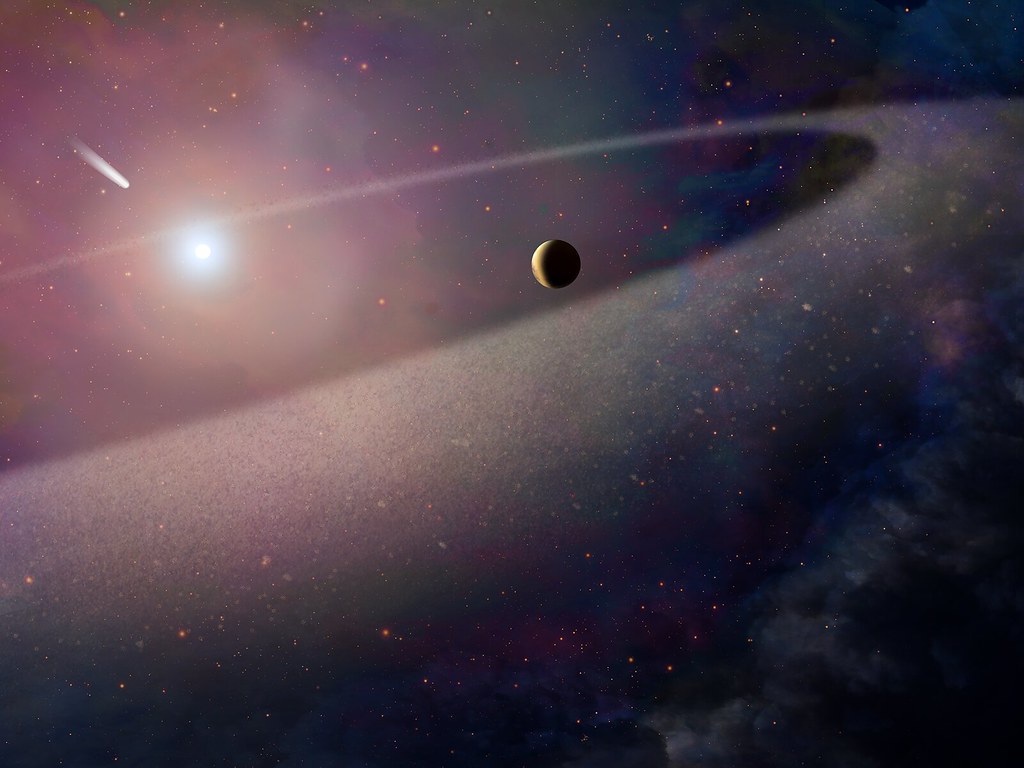
The new study on comets and life on Earth challenges the long-held belief that these celestial bodies played a crucial role in kick-starting life on our planet. Researchers are now questioning the validity of this theory.
Introduction to the Study
A groundbreaking new study has emerged, challenging the long-held belief that comets played a pivotal role in the origins of life on Earth. Traditionally, scientists have theorized that these celestial bodies delivered essential organic compounds, which sparked the emergence of early life forms. However, the latest research suggests that this narrative may not be as straightforward as previously thought.
The study, conducted by a team of researchers at a prominent university, re-evaluates the chemical processes involved in the formation of life. Their findings indicate that the organic molecules found in comets may not be as abundant or diverse as once believed. Instead, they propose alternative sources for the building blocks of life, which could reshape our understanding of how life began on our planet.
The implications of this research are profound, as it not only challenges existing theories about comets and life on Earth, but also invites further exploration into other potential pathways for the origins of life in the universe.
Background on Comets and Life
Comets have long been a subject of fascination in the scientific community, particularly regarding their potential role in the origin of life on Earth. Historically, many researchers have proposed that these icy celestial bodies delivered essential organic compounds and water, contributing to the development of the planet’s early biosphere. This idea has shaped our understanding of how life may have emerged in the primordial conditions of Earth.
Comets are composed of various elements and compounds, including carbon, hydrogen, nitrogen, and oxygen. These components are vital for the formation of amino acids, which are the building blocks of proteins. The theory suggests that when comets collided with Earth, they deposited these life-sustaining materials into the atmosphere and oceans.
However, recent findings from a new study challenge this long-accepted notion. Researchers argue that the conditions necessary for life, as we understand it, may not have been significantly influenced by comets. This revelation could reshape the narrative surrounding comets and life on Earth, prompting further investigation into alternative origins of life.
Key Findings of the Research
The recent study presents several key findings that challenge the established view of comets and their role in the origins of life on Earth. Researchers conducted a comprehensive analysis of isotopic ratios in materials collected from comet samples.
- Unexpected Isotopic Signatures: The isotopic compositions found in the studied comet material differ significantly from those in early Earth samples, suggesting that comets may not have delivered the essential building blocks for life as previously believed.
- Alternative Sources: The study proposes that other celestial bodies, such as asteroids, could have played a more significant role in delivering organic materials necessary for the emergence of life.
- Implications for Astrobiology: These findings raise questions about the conditions needed for life to arise, emphasizing the need to explore a broader range of celestial phenomena.
Overall, this research adds a new dimension to the ongoing debate regarding comets and life on Earth, highlighting the complexity of life’s origins in our universe.
Implications for Astrobiology
The implications of the recent study are significant for the field of astrobiology. For decades, scientists have theorized that comets played a crucial role in delivering essential organic compounds to Earth, thus facilitating the emergence of life. However, this new research challenges that notion, suggesting alternative pathways for life’s origins that do not rely on these celestial bodies.
Researchers are now urged to reconsider the traditional models of how life may have arisen. The study indicates that the contributions of comets and other extraterrestrial phenomena might be less critical than previously believed. Instead, geological processes and environmental conditions on early Earth could have been more significant in laying the groundwork for life’s development.
Astrobiologists must explore these new avenues, focusing on how life may exist elsewhere without the influence of comets. Understanding the complexities of life’s origins is vital not only for our planet but also for the search for life beyond Earth, making this research a pivotal moment in astrobiology.
Challenges to Existing Theories
As scientists delve deeper into the origins of life, challenges to existing theories about comets and life on Earth are becoming increasingly prominent. The traditional view posits that comets were essential in delivering vital organic compounds to the young Earth, thus kick-starting the biochemical processes necessary for life. However, the recent study raises significant questions about this long-held belief.
The researchers employed advanced analytical techniques to reassess the composition of cometary material. Their findings suggest that the organic compounds found in some comets may not be as bioavailable as previously thought. This raises doubts about the role these celestial bodies played in the emergence of life.
Additionally, the study highlights alternative scenarios that could account for the origins of essential life-building molecules. For instance, geological processes on Earth and solar system dynamics may have been more influential than comets in creating the right conditions for life.
As scientists continue to investigate, the narrative surrounding comets and life on Earth may need a significant reevaluation.
Future Research Directions
As researchers delve deeper into the connection between comets and life on Earth, several future research directions have emerged. These paths aim to clarify the complex relationship between celestial bodies and the origins of life.
One promising area of study involves:
- Analyzing cometary materials for organic compounds and amino acids that could contribute to understanding prebiotic chemistry.
- Conducting laboratory experiments simulating the conditions of early Earth to determine how cometary impacts might have influenced the formation of life.
- Exploring other celestial bodies, such as asteroids and moons, to assess their potential role in delivering essential ingredients for life.
Additionally, researchers plan to enhance modeling techniques to better predict how the impacts of comets might have altered the early Earth’s atmosphere and environmental conditions. Collaborative efforts between planetary scientists and astrobiologists will be crucial in driving these investigations forward. Ultimately, understanding the role of comets in the emergence of life could reshape our knowledge of life’s beginnings on Earth.
Conclusion and Takeaways
In conclusion, the recent study presents a compelling argument that challenges the longstanding belief regarding the role of comets and life on Earth. Through rigorous analysis and innovative methodologies, researchers have provided new insights that could reshape our understanding of life’s origins.
The key takeaways from this research include:
- Reevaluation of Cometary Contributions: The study suggests that the contribution of comets may not be as significant as previously thought.
- Alternative Theories: Other potential sources for life’s building blocks are gaining attention, prompting scientists to explore different avenues.
- Need for Further Research: The findings underscore the importance of ongoing investigations to clarify the complex relationship between celestial bodies and the emergence of life.
As our quest for understanding the origins of life continues, this study invites both skepticism and curiosity, encouraging a broader dialogue within the scientific community. The implications for astrobiology and our search for life beyond Earth remain profound, making future research essential.
Recent findings suggest a more complex relationship between comets and life on Earth than previously understood. This new study questions long-held beliefs about the role of comets and life on Earth in the development of biological systems.
By NASA Goddard Photo and Video via Openverse